Golden Turkey Stock
There is something deeply comforting about turning what looks like leftovers into something rich, glossy, and full of life. The moment turkey bones start simmering with onion, carrot, celery, and herbs, the kitchen takes on that cozy, homey smell that feels like a second meal all on its own. This stock is clear, savory, and quietly powerful, the kind of thing that makes soups taste fuller, gravies taste deeper, and simple rice feel suddenly special. Trust me, you’re going to love this.
Why This Cozy Kitchen Staple Deserves a Spot in Your Fridge
Some recipes shout for attention, but this one wins people over in a slower, more satisfying way. It takes scraps and simple vegetables and turns them into liquid gold, with a clean turkey flavor that feels both delicate and deeply nourishing. Let me tell you, it’s worth every sip and every spoonful.
The best part is how useful it becomes once it is tucked away in jars or containers. A quick soup starts faster, stuffing tastes better, and even a plain pan sauce gets that little something extra. This one’s a total game-changer, especially when you want to stretch your ingredients and still cook like you planned ahead all week.
The Story Behind This Frugal and Flavorful Classic
Long before stock became something people grabbed in a carton, home cooks were making it from roasted bones, vegetable trimmings, and a little patience. It has roots in practical cooking traditions all over the world, where wasting good flavor simply was not an option. That old-school wisdom still holds up beautifully today.
In many American kitchens, turkey stock became especially popular after holiday meals, when the roast was gone but the carcass still had plenty to give. Instead of tossing it, cooks simmered it low and slow to coax out every bit of savory depth. And now that we know how much body and richness bones, herbs, and aromatics can bring to a pot, it feels less like a thrifty trick and more like a smart kitchen ritual.
Why Home Cooks Keep Coming Back to This Batch
This stock earns its place because it is dependable, flexible, and packed with flavor without being fussy. Once you make it, you start seeing all the ways it can quietly improve your cooking.
Versatile: Use it for soups, gravies, risotto, stuffing, sauces, or even to cook grains. It slips into so many recipes and instantly makes them taste more layered.
Budget-Friendly: It transforms bones and a handful of everyday vegetables into something genuinely valuable. You are getting another full round of cooking from ingredients that might otherwise go to waste.
Quick and Easy: The prep is wonderfully simple, and the stove does most of the work. Once everything is in the pot, you mostly just let time handle the magic.
Customizable: You can keep it classic or lean into your favorite herbs. A little more thyme or parsley shifts the aroma in a lovely way without changing the whole soul of the stock.
Crowd-Pleasing: Good stock makes everything taste more comforting, and people notice that even if they cannot quite explain why. It is the kind of behind-the-scenes detail that makes a meal feel extra cared for.
Make-Ahead Friendly: It stores beautifully in the fridge or freezer, so you can build flavor now and enjoy the payoff later. That kind of kitchen head start always feels good.
Great for Leftovers: Once chilled, it can be portioned into small containers for easy use. You can thaw only what you need, which keeps things simple on busy days.
Smart Little Secrets for Better Flavor Every Time
Before we get into tools and ingredients, here are a few tricks that make a noticeable difference. These are the kinds of small details that separate a decent stock from one that tastes rounded, clear, and deeply savory.
- Start with cold water: Cold water helps the bones and vegetables release flavor gradually, which gives the broth a cleaner, fuller taste.
- Keep the simmer gentle: A rolling boil can make the liquid cloudy and a little rough. Low and steady is what gives you that beautiful clear finish.
- Skim when needed: If foam rises early on, skim it away. It only takes a minute and helps the stock stay cleaner in both flavor and appearance.
- Do not salt early: Since stock often gets reduced in later recipes, salting too soon can make it overly intense later. It is better to season the final dish instead.
- Strain with care: A fine mesh strainer gives you a smoother, cleaner result. That final step makes the broth look as polished as it tastes.
The Simple Equipment That Makes the Process Easy
Now that the flavor game plan is set, let’s move into the kitchen setup. You do not need fancy gear here, just a few dependable tools that help everything go smoothly.
Large stockpot: This gives the ingredients enough room to simmer comfortably without crowding, which helps the flavors circulate gently.
Fine mesh strainer: This is what gives the finished broth its clean, clear look by catching the little bits of herbs, vegetables, and bone fragments.
Ladle: A ladle makes skimming and transferring the hot stock much easier and a lot less messy.
Heatproof storage containers or jars: Once the stock is strained and cooled slightly, these make storing it in the fridge or freezer simple and safe.
Tongs: These are handy for lifting out large bones and softened vegetables before the final strain.
Everything That Goes Into the Pot
And now we get to the heart of it, the ingredients that slowly melt together into something savory, aromatic, and deeply comforting. Each one has a job to do, and together they create a stock that tastes balanced rather than heavy.
- Turkey bones and scraps: 1 roasted turkey carcass plus 2 pounds leftover turkey bones and skin, these bring the deep savory backbone and give the stock its body.
- Yellow onion: 1 large onion, quartered, this adds sweetness and that mellow aromatic depth that makes the broth feel round and complete.
- Carrots: 3 medium carrots, cut into large chunks, these contribute gentle sweetness and a soft earthy note.
- Celery stalks: 3 stalks celery, cut into large chunks, these bring freshness and that classic savory stock flavor.
- Garlic: 1 whole head garlic, halved crosswise, this gives the broth a subtle warmth without making it taste sharply garlicky.
- Fresh parsley: 1 small bunch fresh parsley, this brightens the pot and keeps the flavor from feeling too dark or heavy.
- Fresh thyme: 6 sprigs fresh thyme, this adds a woodsy aroma that pairs beautifully with turkey.
- Bay leaves: 2 bay leaves, these deepen the background flavor and give the broth that slow-cooked feel.
- Whole black peppercorns: 1 teaspoon whole black peppercorns, these add gentle spice and complexity.
- Apple cider vinegar: 1 tablespoon apple cider vinegar, this quietly helps draw flavor from the bones and gives the stock a more complete finish.
- Cold water: 14 cups cold water, this is the base that slowly gathers all the flavor as the pot simmers.
Easy Swaps When You Need to Improvise
If you are missing one or two things, do not worry, this stock is forgiving. A few smart swaps can still give you a beautiful result while keeping the flavor balanced.
Yellow onion: White onion or 2 shallots.
Carrots: 2 parsnips or 1 extra celery stalk for a less sweet profile.
Celery stalks: 1 small fennel bulb for a slightly sweeter, more aromatic note.
Fresh parsley: 2 teaspoons dried parsley.
Fresh thyme: 1 teaspoon dried thyme.
Apple cider vinegar: 1 tablespoon white wine vinegar or fresh lemon juice.
The Ingredients That Really Do the Heavy Lifting
By this point, you can probably already imagine the aroma building in the pot. Still, there are a couple of ingredients that truly shape the final result in a big way.
Turkey bones and scraps: This is where the richness comes from. The bones bring body, while the little bits of roasted meat and skin add that unmistakable savory depth that makes the stock taste full and satisfying.
Fresh thyme: Thyme gives the broth a subtle woodsy perfume that feels warm and familiar. It does not overpower the pot, but it quietly ties the whole flavor together.
Let’s Turn It Into Liquid Gold
Now let’s dive into the part that feels especially satisfying, the slow transformation from a pot of simple ingredients into something clear, fragrant, and full of flavor. The process is easy to follow, and each step builds naturally on the one before it.
- Preheat Your Equipment: Place a large stockpot on the stove over medium heat so it is ready to receive the ingredients. You are not heating oil here, just getting your cooking space set for a smooth start.
- Combine Ingredients: Add the turkey bones and scraps, onion, carrots, celery, garlic, parsley, thyme, bay leaves, peppercorns, apple cider vinegar, and cold water to the pot. The ingredients should be mostly submerged so the flavors can infuse evenly.
- Prepare Your Cooking Vessel: Bring the pot just to a gentle simmer over medium heat, then immediately lower the heat to maintain a very soft bubble. Skim off any foam that rises to the top during the first 20 to 30 minutes.
- Assemble the Dish: Continue simmering the stock uncovered for 4 hours, checking from time to time and adjusting the heat if needed. You want movement in the liquid, but not a hard boil.
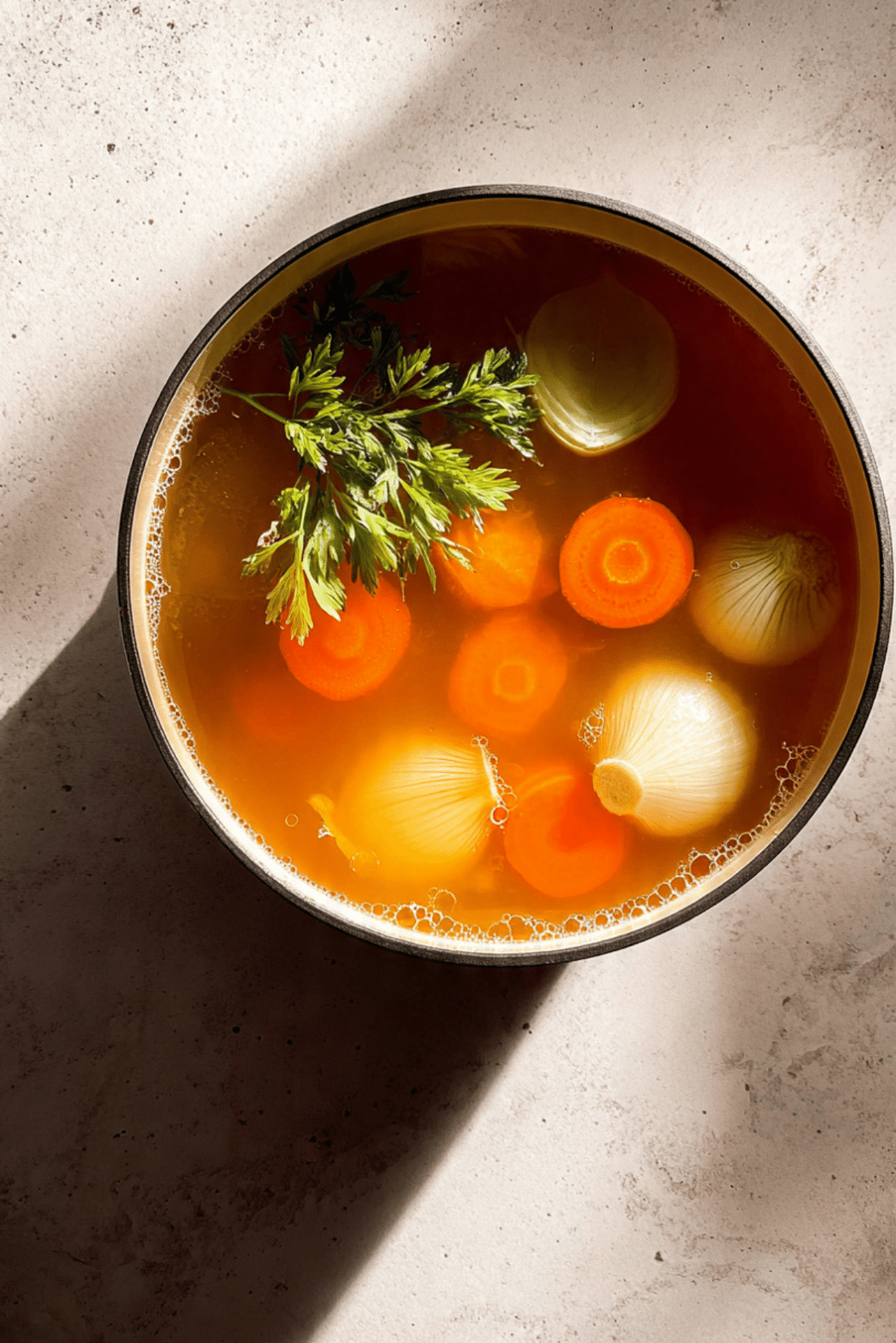
- Cook to Perfection: As the hours pass, the broth will turn a beautiful golden amber and the aroma will deepen. If the water level drops too far and exposes the bones, add a little hot water just until everything is covered again.
- Finishing Touches: Remove the large bones and vegetables with tongs, then carefully strain the liquid through a fine mesh strainer into heatproof containers. Let it cool slightly, then chill it promptly.
- Serve and Enjoy: Use it right away in soups, gravies, sauces, or grain dishes, or store it for later. Once chilled, you can also lift off any fat from the top for an even cleaner finish.
How the Flavor Deepens and the Texture Comes Together
One of the loveliest parts of this recipe is how quietly dramatic the transformation feels. At the beginning, the pot smells bright and vegetal, with fresh onion and celery leading the way. A couple of hours in, the turkey starts to come forward, richer and more savory, with thyme and bay softening into the background.
By the end, the stock tastes layered and full without feeling heavy. The texture stays light enough to sip, but it has just enough body to coat the spoon in that satisfying way. It is clear, aromatic, and deeply savory, with a soft sweetness from the carrots and onion that keeps everything balanced.
A Few Helpful Tricks for a Better Pot
Once you have made it once, you will see how easy it is to shape the final flavor to your liking. Here are a few extra tips that can help you get a result you really love.
- Use roasted bones for extra depth: If your turkey bones are already roasted, the stock will come out darker and richer, with a more developed savory flavor.
- Chill overnight for easy fat removal: Once cold, the fat firms up on top and lifts off in one easy layer.
- Freeze in smaller portions: Freezing 1 cup or 2 cup portions makes it much easier to grab exactly what you need later.
- Label the date: Homemade stock is precious, and a quick label saves guesswork later when your freezer starts filling up.
Common Slip-Ups and How to Avoid Them
Even a simple stock can go a little sideways if the heat is too high or the balance gets thrown off. The good news is that these are all easy fixes once you know what to watch for.
- Boiling too hard: This can make the stock cloudy and flatten the flavor. Keep the heat low and let it barely simmer.
- Adding too many strong vegetables: Things like broccoli or bell pepper can overpower the broth. Stick to classic aromatics for the cleanest flavor.
- Salting too early: The stock may reduce later in another recipe, which can make it far too salty. Season the final dish instead.
- Stopping too soon: A short simmer can leave the broth tasting thin. Give it the full 4 hours so the flavor has time to build.
A Quick Look at the Nutrition
Before we move into timing and storage, here is the practical snapshot. This stock is light, savory, and useful in all kinds of recipes, which makes it especially nice to keep on hand.
Servings: 12 cups
Calories per serving: 35
Note: These are approximate values.
Timing at a Glance
One reason this recipe feels so approachable is that the hands-on time is low, even though the flavor is deep and developed. Most of the work comes from the slow simmer, not from constant attention.
Prep Time: 15 minutes
Cook Time: 4 hours
Total Time: 4 hours 15 minutes
Make-Ahead and Storage Tips That Make Life Easier
This is one of those kitchen projects that pays you back later, which is honestly part of the charm. Once the stock is made, you have a flavorful head start waiting for you in the fridge or freezer.
You can make it a day or two ahead and keep it chilled in airtight containers in the refrigerator for up to 4 days. For longer storage, freeze it for up to 3 months. I like freezing it in measured portions so there is no guessing when I need a quick cup for soup or sauce. To reheat, warm it gently on the stove or in the microwave until hot.
My Favorite Ways to Use It
Now comes the fun part, imagining all the ways this stock can step into your cooking and make everything taste more thoughtful. It is subtle on its own, but it lifts other ingredients beautifully.
Use it as the base for noodle soup, vegetable soup, or a simple turkey and rice bowl. Stir it into gravy for roast dinners, or use it to cook stuffing, rice, couscous, or farro. It is also wonderful in creamy sauces where you want savory depth without heaviness.
Smart and Delicious Ideas for Leftovers
If you end up with extra stock, and I hope you do, there are plenty of tasty ways to put every drop to work. This is where the recipe keeps giving.
Turn it into a quick weeknight soup by adding cooked vegetables, noodles, or leftover turkey. Reduce a small pot of it to make a richer pan sauce, or freeze it in ice cube trays for small flavor boosts in sautés and gravies. You can even use it in place of water for cooking grains, which makes a simple side dish feel much more special.
A Few More Good Tips Before You Go
By now the process probably feels familiar, and that is the beauty of a recipe like this. Still, a few final reminders can make the whole experience even smoother.
Keep your containers shallow when cooling the stock so it chills faster. Do not press the vegetables too hard when straining, because that can cloud the broth. And if you want an especially clear finish, strain it a second time through a clean fine mesh strainer.
How to Make It Look as Good as It Tastes
Even something as humble as stock can look beautiful when served with a little care. A clear broth with a warm amber color already has a quiet kind of elegance.
Serve it in a simple white mug or bowl if you plan to sip it on its own, or pour it into clear jars if you are storing it and want that gorgeous golden color on display. A neat label, a clean rim, and good light make even your fridge stash feel a little luxurious.
Tasty Variations to Play With
Once you have the basic method down, it is easy to make the stock feel slightly different depending on what you need or what flavors you love most. Here are a few variations worth trying.
Herb-Forward Version: Add 2 extra sprigs of thyme and 1 extra bay leaf for a more aromatic, woodsy broth.
Peppery Pot: Increase the peppercorns to 1 1/2 teaspoons if you want a slightly livelier finish.
Extra-Rich Batch: Add a few extra roasted turkey bones if you have them, which gives the stock more body and a deeper savory edge.
Vegetable-Heavy Style: Increase the carrots and celery by 1 each for a slightly sweeter, rounder broth that works beautifully in soups.
Freezer Concentrate: Simmer the strained stock a little longer to reduce it by about one-third, then freeze it in small portions for a more powerful flavor booster.
FAQ’s
1. Can I use raw turkey bones instead of roasted ones?
Yes, you can. The stock will still be flavorful, but roasted bones usually give a darker color and a deeper, richer taste.
2. Do I need to peel the onion and carrots?
No, not necessarily. A quick wash is usually enough, especially since everything gets strained out later. Peeled vegetables will give a slightly cleaner look, though.
3. Why is my stock cloudy?
That usually happens when the pot boils too hard or when the stock is stirred too much. A gentle simmer gives the clearest result.
4. Can I make this in a slow cooker?
Yes. Add everything to the slow cooker and cook on low for 10 to 12 hours, then strain as usual.
5. How do I know when the stock is done?
It should smell rich and savory, and the liquid should have turned a warm golden color. The taste should feel full and rounded, not watery.
6. Can I add other vegetables?
You can, but keep them mild. Onion, carrot, and celery are classic because they support the turkey without overpowering it.
7. Is the apple cider vinegar necessary?
It is helpful, but the stock will still work without it. That small splash just helps pull a bit more depth from the bones.
8. How long does it last in the fridge?
Stored in airtight containers, it keeps well for up to 4 days in the refrigerator.
9. Can I freeze it in jars?
Yes, as long as the jars are freezer-safe and you leave headspace for expansion. Let the stock cool before freezing.
10. What is the best way to use it first?
A simple soup is always a great start, but it also shines in gravy, rice, stuffing, and pan sauces. Honestly, once you have it, you will find excuses to use it everywhere.
Conclusion
Good stock feels a little bit like kitchen magic, even though it comes from such humble beginnings. With a handful of vegetables, a pot of water, and a little patience, you end up with something deeply savory and incredibly useful. This one is warm, practical, and full of that homemade flavor you just cannot fake. Trust me, once you make a batch and see that beautiful golden broth waiting for you, you will want to keep it in your kitchen all the time.
Print
Golden Turkey Stock
- Prep Time: 15 minutes
- Cook Time: 4 hours
- Total Time: 4 hours 15 minutes
- Yield: 12 cups 1x
- Category: Basics
- Method: Simmering
- Cuisine: American
- Diet: Low Calorie
Description
A clear, savory homemade turkey stock made by gently simmering roasted turkey bones with onion, carrots, celery, garlic, herbs, and peppercorns until deeply flavorful and golden.
Ingredients
- 1 roasted turkey carcass plus 2 pounds leftover turkey bones and skin
- 1 large onion, quartered
- 3 medium carrots, cut into large chunks
- 3 stalks celery, cut into large chunks
- 1 whole head garlic, halved crosswise
- 1 small bunch fresh parsley
- 6 sprigs fresh thyme
- 2 bay leaves
- 1 teaspoon whole black peppercorns
- 1 tablespoon apple cider vinegar
- 14 cups cold water
Instructions
- Place a large stockpot on the stove over medium heat.
- Add the turkey bones and scraps, onion, carrots, celery, garlic, parsley, thyme, bay leaves, peppercorns, apple cider vinegar, and cold water to the pot.
- Bring the pot just to a gentle simmer over medium heat, then lower the heat to maintain a very soft bubble. Skim off any foam that rises during the first 20 to 30 minutes.
- Simmer uncovered for 4 hours, checking occasionally and adjusting the heat as needed. Add a little hot water only if the bones become exposed.
- Remove the large bones and vegetables with tongs.
- Strain the stock through a fine mesh strainer into heatproof containers.
- Cool slightly, then refrigerate or freeze. Use in soups, gravies, sauces, or grain dishes.
Notes
- Do not salt the stock during cooking, since it may be reduced later in other recipes.
- For a cleaner finish, chill the stock and remove the solidified fat from the top before using.
- Store in the refrigerator for up to 4 days or freeze for up to 3 months.
- Freeze in 1 cup or 2 cup portions for easy use later.
Nutrition
- Serving Size: 1 cup
- Calories: 35
- Sugar: 1g
- Sodium: 95mg
- Fat: 1g
- Saturated Fat: 0g
- Unsaturated Fat: 1g
- Trans Fat: 0g
- Carbohydrates: 1g
- Fiber: 0g
- Protein: 6g
- Cholesterol: 10mg
Keywords: turkey stock, homemade stock, holiday leftovers, bone broth alternative, soup base, savory broth