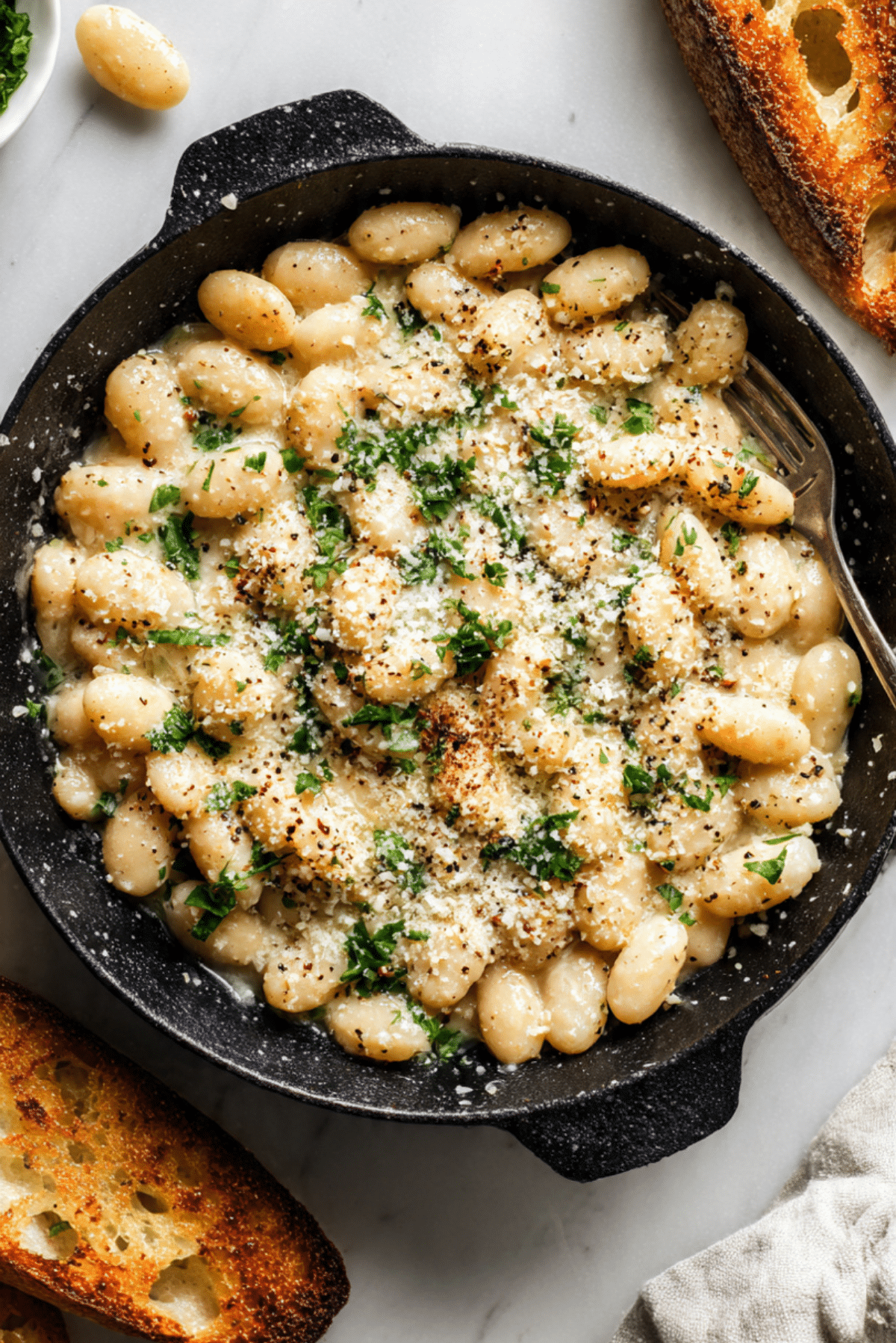
Cacio E Pepe White Beans Skillet
There is something wildly comforting about a skillet full of creamy white beans wrapped in cheese, black pepper, and just enough buttery richness to make every bite feel a little luxurious. This is the kind of dinner that looks and tastes far fancier than the effort it asks from you, and trust me, you’re going to love this. It is cozy, savory, and deeply satisfying, especially with toasted bread ready to scoop up every bit of that glossy sauce.
Why This Cozy Skillet Deserves a Spot in Your Weeknight Rotation
Some recipes win you over with a long simmer or a dramatic finish, but this one does it with simplicity. It takes the spirit of classic cacio e pepe and gives it a hearty, pantry-friendly twist by letting white beans stand in for pasta. The result is creamy, peppery, and rich, with tender beans that soak up flavor beautifully. It feels rustic and elegant at the same time, which is honestly a pretty irresistible combo.
A Roman-Inspired Idea with a Hearty Pantry Twist
Cacio e pepe comes from Rome, where the magic of pecorino or Parmesan, black pepper, and pasta water has been winning people over for generations. This skillet borrows that beautiful flavor foundation and turns it into something a little more weeknight friendly and a little more filling in its own way. White beans bring creaminess, protein, and that soft, velvety texture that makes the sauce cling in all the right places. It is not the traditional pasta dish, of course, but it carries the same bold character, and let me tell you, it is worth every bite.
Reasons This Recipe Works Every Single Time
Before you grab the skillet, it helps to know exactly why this one’s a total game-changer.
Versatile: It works as a light main dish, a hearty side, or even a brunchy savory plate with toast and eggs on the side. You can dress it up or keep it simple, and it still feels special.
Budget-Friendly: Most of the ingredients are pantry staples, which means you can create something that tastes restaurant worthy without stretching your grocery budget.
Quick and Easy: From start to finish, this comes together fast. It is ideal for those evenings when you want real comfort food but do not want to spend forever at the stove.
Customizable: You can swap the beans, adjust the pepper level, or add greens for extra freshness. It is flexible without losing its soul.
Crowd-Pleasing: Creamy beans, nutty cheese, buttery depth, and toasty bread are hard to resist. Even people who are not usually excited about beans tend to go back for seconds.
Make-Ahead Friendly: The base reheats well with a splash of water, so it can absolutely help you get ahead on a busy week.
Great for Leftovers: Leftover beans spooned over toast or tucked beside roasted vegetables make a ridiculously good next-day meal.
Chef Secrets for the Best Flavor and Texture
Now that the skillet has earned your attention, here are a few little tricks that make a big difference.
- Toast the pepper in butter: This wakes up the pepper and gives it a deeper, warmer aroma instead of a flat sharpness.
- Mash a small portion of the beans: A few crushed beans help create that creamy, clinging texture without needing flour or cream.
- Add the cheese off the heat if needed: If the pan is screaming hot, the cheese can turn clumpy. Gentle heat gives you the smoothest finish.
- Use freshly grated Parmesan: Pre-shredded cheese does not melt as silkily, so grating it yourself really pays off here.
- Keep warm water nearby: A splash or two loosens the sauce beautifully if it tightens up too much before serving.
The Simple Tools That Make This Dish Effortless
The beauty of this meal is that it does not ask for much, and now let’s dive into the few kitchen basics that make it shine.
Large skillet: This is where everything comes together, and a wide pan helps the beans heat evenly while giving the sauce room to coat them.
Wooden spoon or spatula: Perfect for stirring gently and mashing a few beans without turning everything into puree.
Microplane or fine grater: Freshly grated Parmesan melts more smoothly and gives the skillet that delicate, fluffy finish.
Chef’s knife: Useful for chopping parsley and slicing the bread if needed.
Measuring cups and spoons: Helpful for keeping the cheese, butter, pepper, and water balanced.
What You’ll Need to Build All That Creamy, Peppery Goodness
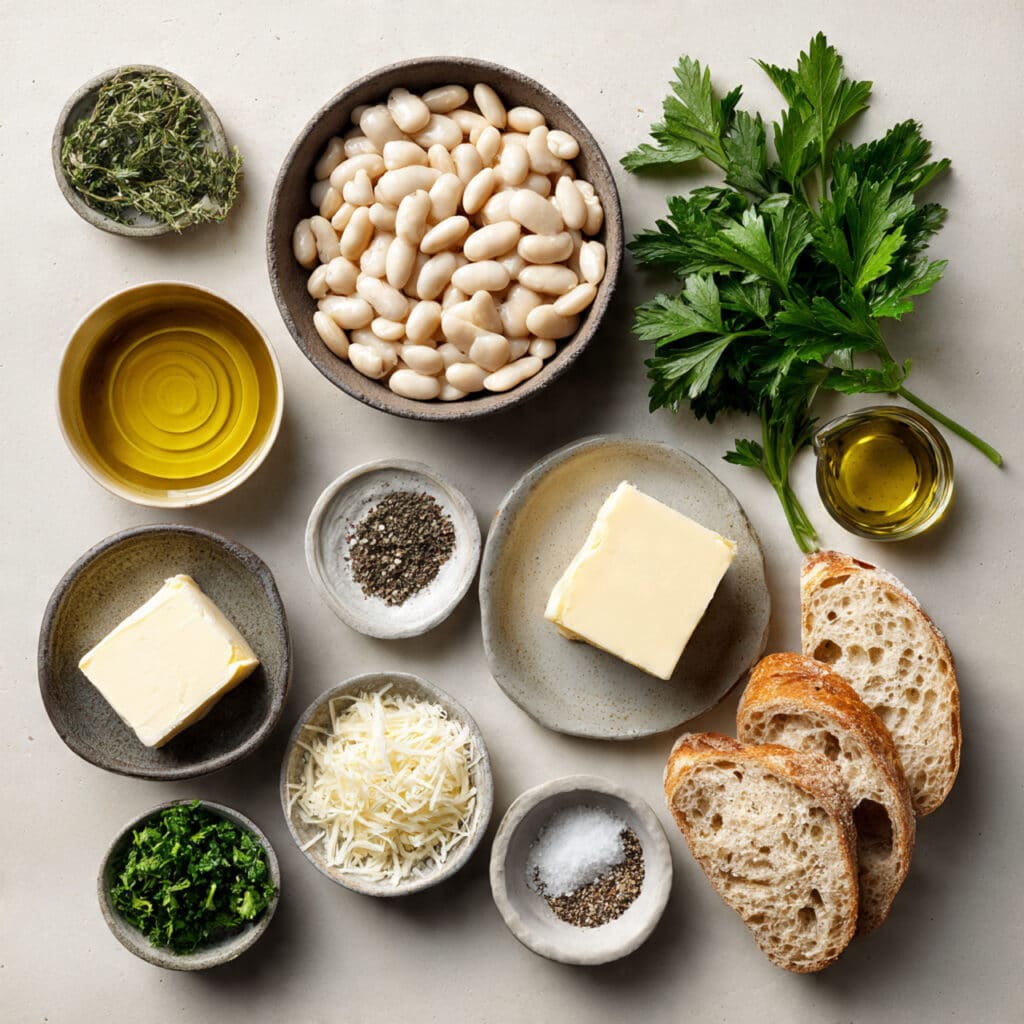
Every ingredient here has a job to do, and together they make a skillet that tastes much bigger than the shopping list suggests.
- Cannellini beans: 2 cans, 15 ounces each, drained, not rinsed, these bring creaminess, protein, and the hearty base that soaks up the sauce.
- Unsalted butter: 2 tablespoons, this adds richness and helps bloom the pepper for deeper flavor.
- Olive oil: 1 tablespoon, it rounds out the sauce and gives the skillet a glossy finish.
- Freshly ground black pepper: 1 1/2 teaspoons, plus more to taste, this is the bold backbone of the dish and gives it that classic cacio e pepe personality.
- Warm water: 1/2 cup, plus more as needed, this helps loosen the beans and create a silky sauce.
- Parmesan cheese: 1 cup, finely grated, divided, this melts into the beans and brings salty, nutty depth.
- Kosher salt: 1/4 teaspoon, or to taste, just enough to sharpen the flavors without overwhelming the cheese.
- Rustic bread: 4 slices, toasted, this turns every scoop into a full meal and catches all the extra sauce.
- Fresh parsley: 1 tablespoon, chopped, optional, this adds a little color and freshness at the end.
Easy Swaps That Still Keep It Delicious
If you need to work with what is already in your kitchen, there is plenty of room to adapt.
Cannellini beans: Great northern beans or navy beans.
Parmesan cheese: Pecorino Romano for a sharper, saltier finish.
Butter: Extra olive oil for a slightly lighter feel.
Rustic bread: Sourdough, baguette slices, or toasted whole grain bread.
Parsley: Fresh chives or a little lemon zest for brightness.
The Ingredients That Truly Steal the Show
A couple of elements really define the whole experience, and they deserve a little spotlight.
Black pepper: This is not just seasoning here. It is the flavor driver, bringing warmth, bite, and that unmistakable cacio e pepe character.
Parmesan cheese: Finely grated Parmesan melts into the beans and turns the cooking liquid into a glossy, savory sauce that feels almost impossibly luxurious for such a short recipe.
Let’s Get This Skillet on the Table
This is where the magic happens, and it comes together in a way that feels almost too easy for how satisfying the final spoonful is. Here are the steps you’re going to follow.
- Preheat Your Equipment: Set a large skillet over medium heat. Toast the bread separately until golden and crisp, then keep it nearby for serving.
- Combine Ingredients: Measure the drained beans, butter, olive oil, black pepper, warm water, Parmesan, salt, and parsley so everything is ready to move quickly once the pan is hot.
- Prepare Your Cooking Vessel: Add the butter and olive oil to the skillet. When the butter melts, stir in the black pepper and cook for 30 to 60 seconds, until fragrant and toasty.
- Assemble the Dish: Add the beans and warm water, then stir gently. Mash a small portion of the beans with the back of your spoon to help the sauce become creamy. Stir in 3/4 cup of the Parmesan and the salt.
- Cook to Perfection: Let the beans simmer for 3 to 5 minutes, stirring often, until everything is hot and the sauce looks glossy and lightly thickened. Add another splash of warm water if it gets too tight.
- Finishing Touches: Remove from the heat and stir in the remaining 1/4 cup Parmesan. Taste and add more black pepper or salt if needed. Scatter the parsley over the top if using.
- Serve and Enjoy: Spoon the beans into shallow bowls or serve straight from the skillet with toasted bread on the side. Finish with extra Parmesan and another crack of black pepper.
What Makes Every Bite So Good
As the beans warm and a few of them break down, they create a sauce that feels creamy without being heavy. The butter smooths everything out, the olive oil adds body, and the Parmesan melts in with that salty, nutty depth that coats every bean. Then the black pepper cuts through with little sparks of warmth, which keeps the whole skillet lively instead of one-note. Add toast, and suddenly you have crunch against creaminess, which is just such a satisfying contrast.
Smart Tips for a Better Bowl Every Time
A few little adjustments can make the skillet feel even more polished and even more your own.
- Use warm water, not cold: It blends into the sauce more smoothly and keeps the skillet from cooling down too fast.
- Grate the cheese finely: Smaller shreds melt faster and help you avoid clumps.
- Toast the bread well: Crisp bread gives better contrast and holds up beautifully when dipped.
- Finish with extra pepper at the table: That final fresh crack makes the aroma pop.
Common Slip-Ups and How to Dodge Them
Even easy recipes have a few spots where things can go a bit sideways, so here is what to watch for.
- Adding cheese over very high heat: This can make the sauce grainy. Lower the heat or pull the skillet off the burner first.
- Rinsing the beans too aggressively: A little starch helps the sauce come together, so draining is enough.
- Skipping the bean mashing step: Without it, the skillet will be looser and less creamy.
- Over-salting early: Parmesan already brings plenty of saltiness, so season carefully and taste as you go.
A Quick Look at the Nutrition
Before you head back for another slice of toast, here is a practical snapshot of what you are getting.
Servings: 4
Calories per serving: 540
Note: These are approximate values.
Timing So You Can Plan Dinner Easily
One more reason this skillet is so lovable is how little time it asks from you.
Prep Time: 5 minutes
Cook Time: 10 minutes
Total Time: 15 minutes
Make-Ahead and Storage Tips That Actually Help
If you want to get a head start, you can grate the cheese, drain the beans, chop the parsley, and toast the bread ahead of time. Once cooked, the beans keep well in an airtight container in the refrigerator for up to 3 days. The sauce will thicken as it sits, which is completely normal. Reheat gently in a skillet or saucepan with a splash of warm water to bring it back to that creamy texture. Freezing is possible, though the sauce may lose a little of its silky finish, so I think it is best enjoyed fresh or within a few days.
The Best Ways to Serve This Cozy Favorite
This dish is lovely on its own, but it also plays well with others. Serve it with a crisp green salad for freshness, or with roasted broccoli for a more complete plate. Toasted sourdough is the obvious partner, but grilled bread rubbed lightly with garlic is even better. For a cozy dinner spread, add marinated olives and a simple tomato salad and you have something that feels low effort but very put together.
How to Turn Leftovers Into Something New
Leftovers never feel boring here, which is always a win. Spoon the beans over thick toast and finish with a fried egg for breakfast or lunch. Warm them and serve over polenta for an extra cozy dinner. You can also thin them slightly with water or broth and turn them into a rustic bean bowl with sautéed greens on the side. This one really likes a second life.
Extra Little Touches That Make a Big Difference
If you love a stronger cheese flavor, save a little extra Parmesan for the top right before serving. For more brightness, a tiny bit of lemon zest can wake up the whole skillet without changing its identity too much. And if you like a looser, more spoonable finish, do not be shy about adding another splash of warm water at the end. This recipe is very forgiving, which is part of why it is such a keeper.
Make It Look as Good as It Tastes
Presentation is simple here, but a few details can make it feel truly special. Serve the beans in a dark skillet or shallow white bowls so the creamy sauce and black pepper stand out. Pile the toast beside the beans rather than underneath, so it keeps its crunch. Finish with fluffy grated Parmesan, a few parsley leaves, and one last crack of pepper right before it hits the table. It looks rustic, warm, and just a little bit fancy.
Tasty Variations Worth Trying
Once you fall for the base version, there are a few fun directions you can take it.
Add greens: Stir in a couple of handfuls of baby spinach at the end until just wilted for a fresher, greener finish.
Use pecorino Romano: This gives the skillet a more classic sharpness and a stronger Roman-style vibe.
Make it brothy: Increase the warm water slightly for a looser, spoonable bowl that feels especially cozy with lots of toast.
Top with crispy mushrooms: Sautéed mushrooms add savory depth and a meatier bite without changing the heart of the dish.
Serve over polenta: For an even more comforting meal, spoon the creamy beans over soft polenta and finish with extra cheese.
FAQ’s
Q1: Can I use a different kind of white bean?
Yes, absolutely. Great northern beans and navy beans both work well, though cannellini beans are especially creamy and hold their shape nicely.
A1:
Cannellini beans give the most luxurious texture, but the recipe is flexible enough to handle other white beans without much trouble.
Q2: Do I have to use freshly grated Parmesan?
Freshly grated is best for smooth melting and the cleanest flavor.
A2:
Pre-grated cheese can work in a pinch, but it often does not melt as evenly, so the sauce may be less silky.
Q3: Is this dish vegetarian?
Yes, it is vegetarian as written.
A3:
Just be sure your Parmesan is a vegetarian-friendly version if that matters for your table.
Q4: Can I make it ahead?
Yes, though it is at its very best right after cooking.
A4:
Store it in the fridge and reheat gently with a splash of warm water to loosen the sauce.
Q5: What if my sauce gets too thick?
That is an easy fix.
A5:
Add warm water a tablespoon at a time and stir until it loosens back into a creamy consistency.
Q6: Can I make it without bread?
Of course.
A6:
The toast is wonderful for scooping, but the beans are still delicious on their own or over polenta.
Q7: How peppery is it?
It has a noticeable black pepper kick, which is part of the charm.
A7:
You can reduce the amount slightly if you prefer a gentler finish, then add more at the table if needed.
Q8: Can I add vegetables?
Yes, and greens are especially good here.
A8:
Baby spinach or chopped kale can be stirred in near the end for extra color and freshness.
Q9: What bread works best for serving?
Anything sturdy and toastable is a good match.
A9:
Sourdough, country bread, or baguette slices all hold up nicely against the creamy beans.
Q10: Can I double the recipe?
Yes, as long as your skillet is large enough.
A10:
A roomy pan helps the sauce coat the beans evenly, so scale up with that in mind.
Conclusion
This Cacio E Pepe White Beans Skillet is one of those rare meals that feels both comforting and clever. It is quick, cozy, deeply flavorful, and made from ingredients that are easy to keep around. Whether you pile it onto toast, spoon it straight from the pan, or save a little for the next day, it delivers that rich, peppery, cheesy satisfaction every single time. This one’s a total game-changer, and once you try it, I have a feeling it will become one of those back-pocket dinners you come back to again and again.
Print
Cacio E Pepe White Beans Skillet
- Prep Time: 5 minutes
- Cook Time: 10 minutes
- Total Time: 15 minutes
- Yield: 4 servings 1x
- Category: Dinner
- Method: Skillet
- Cuisine: Italian-Inspired
- Diet: Vegetarian
Description
Creamy white beans cooked in a rich cacio e pepe style sauce with Parmesan, black pepper, butter, and olive oil, served with toasted rustic bread for an easy one-skillet vegetarian meal.
Ingredients
- 2 cans (15 ounces each) cannellini beans, drained, not rinsed
- 2 tablespoons unsalted butter
- 1 tablespoon olive oil
- 1 1/2 teaspoons freshly ground black pepper, plus more to taste
- 1/2 cup warm water, plus more as needed
- 1 cup finely grated Parmesan cheese, divided
- 1/4 teaspoon kosher salt, or to taste
- 4 slices rustic bread, toasted
- 1 tablespoon chopped fresh parsley, optional
Instructions
- Toast the bread until golden and crisp, then set aside.
- Heat a large skillet over medium heat. Add the butter and olive oil.
- When the butter melts, stir in the black pepper and cook for 30 to 60 seconds until fragrant.
- Add the drained beans and warm water. Stir gently, then mash a small portion of the beans with the back of a spoon.
- Stir in 3/4 cup of the Parmesan and the salt.
- Cook for 3 to 5 minutes, stirring often, until the beans are heated through and the sauce is glossy and lightly thickened. Add more warm water as needed to loosen.
- Remove from the heat and stir in the remaining 1/4 cup Parmesan.
- Taste and adjust with more black pepper or salt if needed.
- Top with chopped parsley if using, and serve with toasted bread.
Notes
- Freshly grated Parmesan melts more smoothly than pre-shredded cheese.
- Mashing a few beans helps create a naturally creamy sauce.
- If the mixture thickens too much, stir in a splash of warm water before serving or reheating.
- Great northern beans or navy beans can be used instead of cannellini beans.
Nutrition
- Serving Size: 1 serving
- Calories: 540
- Sugar: 2g
- Sodium: 760mg
- Fat: 26g
- Saturated Fat: 11g
- Unsaturated Fat: 13g
- Trans Fat: 0g
- Carbohydrates: 49g
- Fiber: 12g
- Protein: 25g
- Cholesterol: 40mg
Keywords: cacio e pepe white beans skillet, white bean skillet, Parmesan beans, easy vegetarian skillet dinner, creamy cannellini beans