
Pasta Primavera
A bowl of Pasta Primavera is like a colorful walk through a blooming garden. It’s fresh, it’s lively, and it’s just the kind of dish that brings people together around the table. Every forkful offers a cheerful mix of vegetables tangled in warm pasta, lightly coated in a sauce that feels like sunshine on your tongue. It’s not too heavy, not too fussy, just real, honest food the way it’s meant to be.
Behind the Recipe
This dish was born on one of those early spring afternoons when the sun starts to linger a little longer and the market stalls burst with color. I remember grabbing armfuls of zucchini, cherry tomatoes, and snap peas with no plan other than letting the produce lead the way. A simple pasta dinner was the goal, but what came together was more than that. It was the start of something comforting, vibrant, and entirely too good not to make again and again.
Recipe Origin or Trivia
Although it sounds like a rustic Italian classic, Pasta Primavera was actually popularized in the United States during the 1970s, particularly at New York’s famed Le Cirque restaurant. The name means “spring pasta” in Italian, which is fitting since the dish celebrates fresh, seasonal vegetables. Over time, it’s become a household favorite thanks to its flexibility and the way it turns a fridge full of vegetables into a truly elegant meal.
Why You’ll Love Pasta Primavera
Get ready to fall for this dish over and over again. Here’s why:
Versatile: You can swap in any vegetables you love or need to use up.
Budget-Friendly: Simple, seasonal veggies and pantry pasta keep this dish light on your wallet.
Quick and Easy: It comes together in about 30 minutes, perfect for busy weeknights.
Customizable: Add a protein, go gluten-free, or make it dairy-free. It’s your canvas.
Crowd-Pleasing: With all that color and flavor, it’s a surefire hit at any gathering.
Make-Ahead Friendly: Prep the veggies or even the whole dish in advance and reheat gently.
Great for Leftovers: It reheats beautifully and makes a fabulous lunch the next day.
Chef’s Pro Tips for Perfect Results
Want to take your Pasta Primavera from good to unforgettable? Try these:
- Slice veggies evenly so they cook at the same rate and look pretty on the plate.
- Sauté in stages, starting with firm vegetables like carrots and adding softer ones like tomatoes later.
- Reserve pasta water to adjust the sauce’s texture and help it cling to the pasta.
- Finish with fresh herbs like basil or parsley for a final burst of brightness.
- Use good olive oil and real Parmesan for flavor that sings.
Kitchen Tools You’ll Need
Here’s what will make prep a breeze:
Large Pot: For boiling the pasta to perfect tenderness.
Large Skillet or Sauté Pan: Where the magic happens with those sautéed veggies.
Sharp Knife: To slice all your vegetables cleanly and evenly.
Cutting Board: A sturdy space to prep everything before cooking.
Tongs or Pasta Fork: Makes tossing everything together a snap.
Ingredients in Pasta Primavera
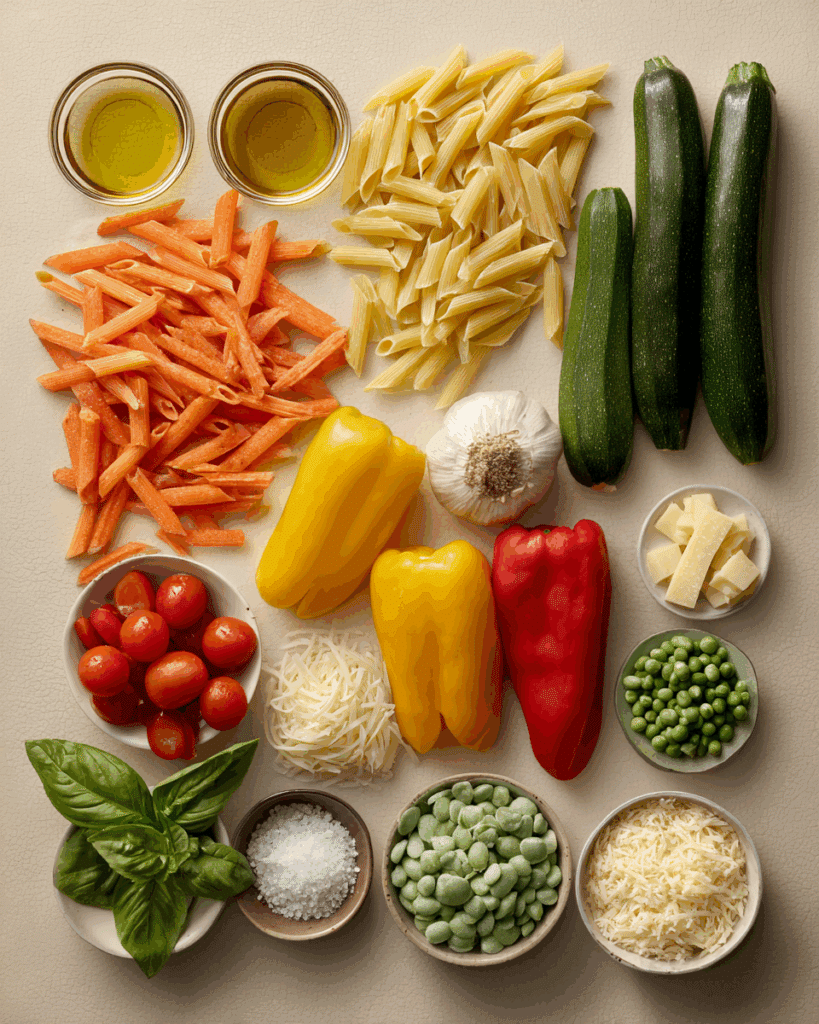
This is where the magic starts. Fresh, vibrant, and working together in harmony:
- Penne Pasta: 12 ounces. The sturdy shape holds sauce and veggies perfectly.
- Olive Oil: 2 tablespoons. For sautéing and adding flavor depth.
- Garlic: 3 cloves, minced. Adds a savory kick that builds the base.
- Carrots: 2 medium, julienned. Sweet and slightly crunchy.
- Zucchini: 1 medium, sliced into half-moons. Tender and fresh.
- Yellow Squash: 1 medium, sliced into half-moons. Balances with a mellow flavor.
- Red Bell Pepper: 1 large, thinly sliced. Brings vibrant color and sweetness.
- Cherry Tomatoes: 1 cup, halved. Juicy and slightly acidic.
- Frozen Peas: 1/2 cup. A pop of color and sweetness.
- Parmesan Cheese: 1/3 cup, grated. Salty, nutty, and oh-so-melty.
- Fresh Basil: 1/4 cup, chopped. Adds a bright herbal finish.
- Salt and Pepper: To taste. To enhance and balance every bite.
- Pasta Water: 1/2 cup, reserved. Helps bring the sauce together.
Ingredient Substitutions
Let’s keep it flexible. Here are some easy swaps:
Penne Pasta: Rotini or farfalle work great too.
Parmesan Cheese: Try nutritional yeast for a dairy-free twist.
Yellow Squash: Use extra zucchini if needed.
Frozen Peas: Fresh if you’ve got them.
Cherry Tomatoes: Diced Roma tomatoes are a fine sub.
Ingredient Spotlight
Zucchini: This tender veggie soaks up flavors beautifully and adds that perfect bite without overpowering.
Parmesan Cheese: A little goes a long way in adding savory depth and creamy richness.
Instructions for Making Pasta Primavera
Let’s get cooking! Here are the steps you’ll follow:
1. Preheat Your Equipment:
Bring a large pot of salted water to a boil for the pasta.
2. Combine Ingredients:
While the water heats, prep all your vegetables and mince the garlic.
3. Prepare Your Cooking Vessel:
Heat olive oil in a large skillet over medium heat. Add garlic and sauté for about 30 seconds until fragrant.
4. Assemble the Dish:
Add carrots and sauté 2 minutes. Then stir in zucchini, yellow squash, and bell pepper. Cook for 5 to 7 minutes until tender-crisp.
5. Cook to Perfection:
Add peas and cherry tomatoes, sautéing for 2 minutes. Add cooked pasta and reserved pasta water to the skillet. Toss to coat.
6. Finishing Touches:
Turn off the heat. Stir in Parmesan and fresh basil. Season with salt and pepper to taste.
7. Serve and Enjoy:
Spoon into bowls and garnish with extra Parmesan and basil if desired. Serve warm and enjoy every colorful bite.
Texture & Flavor Secrets
This dish is all about balance. The tender pasta plays off the crisp-tender vegetables, while the light olive oil and Parmesan coating brings richness without heaviness. The garlic and basil add fragrance, and the sweet tomatoes and peas brighten every bite.
Cooking Tips & Tricks
Here are a few quick ideas to make it even easier:
- Toss pasta with a little oil after cooking to prevent sticking.
- Add red pepper flakes for a gentle heat kick.
- Stir in a splash of lemon juice for added freshness.
- Roast your veggies if you want deeper, caramelized flavor.
What to Avoid
Even simple dishes have their pitfalls. Here’s what to steer clear of:
- Overcooking the vegetables, which can make them mushy.
- Using too much pasta water, which can thin the sauce.
- Skipping the salt, especially in the pasta water.
Nutrition Facts
Servings: 4
Calories per serving: 420
Note: These are approximate values.
Preparation Time
Prep Time: 15 minutes
Cook Time: 20 minutes
Total Time: 35 minutes
Make-Ahead and Storage Tips
Pasta Primavera can be made ahead by prepping the vegetables and cooking the pasta in advance. Store the finished dish in an airtight container in the fridge for up to 3 days. Reheat gently on the stovetop with a splash of water. It’s not ideal for freezing, as the veggies can lose texture, but fresh leftovers are fantastic.
How to Serve Pasta Primavera
Serve it in wide shallow bowls, topped with a flurry of Parmesan and fresh basil. Pair it with crusty bread or a light salad. A sparkling water with lemon or a fresh lemonade keeps the vibe refreshing.
Creative Leftover Transformations
Turn yesterday’s pasta into today’s lunch:
- Toss with arugula for a veggie-packed pasta salad.
- Reheat and top with a fried egg for a brunchy twist.
- Wrap it in foil and bake with extra cheese for a quick pasta bake.
Additional Tips
- For a creamier twist, stir in a dollop of ricotta or a splash of cream.
- Add mushrooms for an earthy boost.
- Always taste and adjust before serving — seasoning is everything.
Make It a Showstopper
Presentation matters. Use a wide bowl to show off those vibrant colors. Sprinkle Parmesan in the center and tuck a basil leaf on top for an extra bit of flair. A drizzle of olive oil right before serving makes it glossy and irresistible.
Variations to Try
- Creamy Primavera: Add a splash of cream or a spoonful of mascarpone.
- Protein Boost: Toss in grilled chicken or chickpeas.
- Spicy Kick: Add red chili flakes or a dash of hot sauce.
- Lemon Herb: Finish with lemon zest and extra herbs.
- Vegan Version: Skip the cheese and use olive oil plus nutritional yeast.
FAQ’s
Q1. Can I use frozen vegetables instead of fresh?
Yes, just thaw and pat them dry before sautéing so they don’t get soggy.
Q2. What pasta shapes work best?
Penne, farfalle, or fusilli are great since they hold sauce and mix well with veggies.
Q3. Can I make it gluten-free?
Absolutely. Just use your favorite gluten-free pasta brand.
Q4. How do I keep the veggies crisp?
Sauté quickly over medium-high heat and avoid overcrowding the pan.
Q5. Can I add a protein?
Yes, grilled chicken, shrimp, or tofu go wonderfully with this dish.
Q6. Is this dish vegan?
It can be if you skip the cheese or use a vegan alternative.
Q7. What herbs work well?
Basil is classic, but parsley, thyme, or oregano are delicious too.
Q8. Can I serve it cold?
Yes, it makes a refreshing pasta salad when chilled.
Q9. How do I reheat leftovers?
Warm gently on the stove with a splash of water or olive oil.
Q10. Will it freeze well?
It’s best fresh, but you can freeze it if needed. Just expect softer veggies upon thawing.
Conclusion
There’s something about Pasta Primavera that just feels like home. It’s easy, forgiving, full of life, and somehow always perfect — whether you’re whipping up a quick weeknight dinner or impressing friends at a weekend gathering. So grab your favorite veggies, twirl that pasta, and dig into something truly satisfying. Trust me, this one’s worth every bite.
Print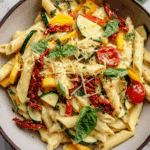
Pasta Primavera
- Prep Time: 15 minutes
- Cook Time: 20 minutes
- Total Time: 35 minutes
- Yield: 4 servings
- Category: Main Dish
- Method: Stovetop
- Cuisine: American-Italian
- Diet: Vegetarian
Description
A vibrant and fresh pasta dish loaded with seasonal vegetables and tossed in a light Parmesan and olive oil sauce. Pasta Primavera is the perfect balance of comfort and freshness, ideal for spring and summer meals.
Ingredients
- Penne Pasta: 12 ounces
- Olive Oil: 2 tablespoons
- Garlic: 3 cloves, minced
- Carrots: 2 medium, julienned
- Zucchini: 1 medium, sliced into half-moons
- Yellow Squash: 1 medium, sliced into half-moons
- Red Bell Pepper: 1 large, thinly sliced
- Cherry Tomatoes: 1 cup, halved
- Frozen Peas: 1/2 cup
- Parmesan Cheese: 1/3 cup, grated
- Fresh Basil: 1/4 cup, chopped
- Salt and Pepper: To taste
- Pasta Water: 1/2 cup, reserved
Instructions
- Bring a large pot of salted water to a boil and cook pasta according to package instructions.
- While pasta cooks, heat olive oil in a large skillet over medium heat and sauté garlic for 30 seconds.
- Add carrots and sauté for 2 minutes, then stir in zucchini, yellow squash, and red bell pepper. Cook for 5 to 7 minutes until tender-crisp.
- Add cherry tomatoes and peas. Sauté for 2 more minutes.
- Drain pasta, reserving 1/2 cup of the cooking water, then add pasta to the skillet with the vegetables.
- Pour in reserved pasta water and toss everything together over low heat.
- Stir in Parmesan cheese and fresh basil. Season with salt and pepper to taste.
- Serve warm with extra Parmesan and basil on top if desired.
Notes
- Use evenly sliced vegetables for even cooking.
- Don’t skip the pasta water, it helps bind the sauce to the pasta.
- Add a splash of lemon juice for extra brightness.
Nutrition
- Serving Size: 1 bowl
- Calories: 420
- Sugar: 7g
- Sodium: 210mg
- Fat: 14g
- Saturated Fat: 4g
- Unsaturated Fat: 9g
- Trans Fat: 0g
- Carbohydrates: 59g
- Fiber: 6g
- Protein: 13g
- Cholesterol: 12mg
Keywords: Pasta Primavera, vegetable pasta, vegetarian pasta, quick dinner, healthy pasta